Chemical Oxygen Demand in Los Haitises National Park: Water Quality Guide

Chemical Oxygen Demand in Los Haitises National Park: Organic Matter, Water Chemistry and Environmental Monitoring
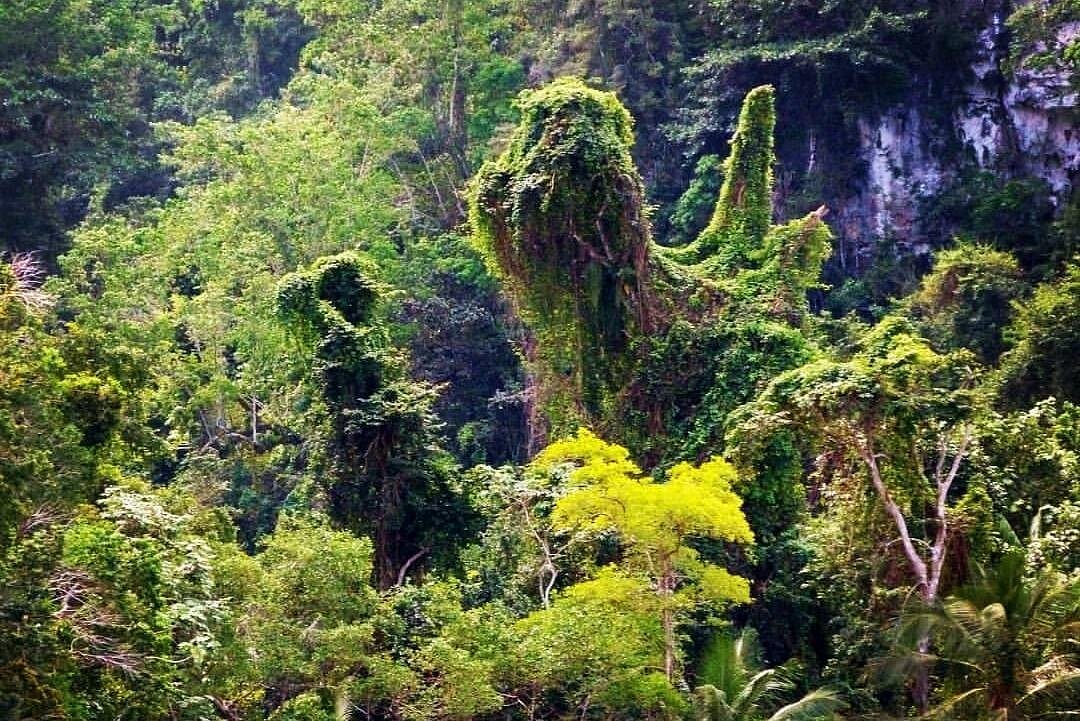
Los Haitises National Park is known for its limestone landscape, mangrove forests, wetlands, coastal waterways and rich biodiversity. Water connects many of these environments. It moves through the park's surface channels, wetlands, underground limestone formations and coastal areas, helping sustain a complex natural ecosystem.
Understanding water quality is therefore an important part of studying and protecting the park. One measurement that environmental scientists can use is chemical oxygen demand, commonly known as COD.
COD is a laboratory measurement that estimates the amount of oxygen equivalent required to chemically oxidize substances in a water sample. It can help researchers understand the presence of oxidizable material in water and compare samples collected from different locations.
However, COD is not a direct measurement of pollution, toxicity or ecological health. Its results need to be interpreted alongside other water-quality indicators and knowledge of the surrounding environment.
This guide explains what COD means, how it is measured, how it differs from BOD, and how it could contribute to water-quality monitoring in Los Haitises National Park.
1. What Is Chemical Oxygen Demand (COD)?
Chemical oxygen demand measures the oxygen equivalent of substances that can be oxidized by a specified chemical method.
In simple terms, it estimates how much oxygen would be equivalent to the amount of oxidizing material consumed during a controlled laboratory reaction.
COD is normally reported in milligrams per litre (mg/L) of oxygen equivalent.
A higher COD result indicates that a sample contains a greater quantity of chemically oxidizable substances under the conditions of the test. These substances may include organic compounds and certain inorganic reducing substances.
Possible contributors in natural waters include:
- Decaying leaves and other plant material
- Dissolved organic compounds
- Small organic particles
- Material carried by surface runoff
- Certain chemically reducing inorganic substances
- Organic matter entering water from external sources
A COD result does not identify the individual substances responsible. Additional laboratory analysis is needed to determine the composition of the material.
2. Why Is COD Relevant to Los Haitises National Park?
Los Haitises contains interconnected aquatic habitats, including mangroves, wetlands, rivers, coastal channels and groundwater-influenced environments.
These habitats naturally receive organic material from surrounding vegetation and soils. Leaves, branches, roots and other plant remains can enter the water, where physical and biological processes gradually transform them.
COD could help researchers assess changes in chemically oxidizable material across these aquatic environments.
For example, a monitoring programme could compare samples from:
- Mangrove channels
- Wetland water bodies
- River-connected areas
- Selected freshwater locations
- Groundwater discharge points, where sampling is appropriate
- Coastal waters influenced by tidal exchange
These are possible monitoring locations, not a claim that a current park-wide COD survey has been completed.
The park's karst geology and groundwater connections make water monitoring particularly interesting. Research on Los Haitises wetlands has examined relationships between wetlands and groundwater using field measurements and water chemistry. Such work provides useful context for understanding the movement of water through the park.
3. Natural Sources of COD in Mangrove and Wetland Water
A COD result does not automatically indicate that a water body is polluted.
Natural ecosystems contain organic matter, and some of this material can be chemically oxidized during laboratory testing.
Mangrove leaves and fallen vegetation
Mangrove trees continuously produce leaves, small branches and other organic material. Some falls onto the forest floor, while some enters nearby channels and water bodies.
As this material breaks down, it contributes organic compounds to the surrounding environment.
Wetland plants
Aquatic and wetland vegetation also produces organic matter through natural growth and decay. Dead leaves, stems and roots may accumulate in shallow water or wetland sediments.
Soil and surface runoff
Rainfall can carry dissolved and suspended material from surrounding land into streams and wetlands. The amount and composition depend on rainfall, soil conditions, vegetation cover and land use.
Naturally occurring dissolved organic matter
Plant decomposition and soil-water interactions can release dissolved organic substances. These compounds may contribute to a water sample's COD even when they originate from natural ecological processes.
For this reason, COD should be interpreted in the context of habitat type, season, hydrology and other water-quality measurements.
4. How Is COD Different from BOD?
COD and biochemical oxygen demand (BOD) are related water-quality measurements, but they assess different processes.
BOD estimates the oxygen used by microorganisms as they biologically break down biodegradable material under specified test conditions.
COD estimates the oxygen equivalent associated with chemical oxidation under a laboratory method.
COD often produces a higher result than BOD because chemical oxidation can measure substances that microorganisms do not readily break down. However, the relationship varies with the sample and the test method. COD and BOD should be treated as separate measurements rather than interchangeable values.
epa.gov+2
For Los Haitises, measuring both could help researchers distinguish between the total chemically oxidizable material and the portion that is biologically biodegradable.
5. How Is Chemical Oxygen Demand Measured?
One widely used approach is the dichromate method.
In EPA Method 410.4, a water sample is treated with a chemical oxidizing agent under controlled laboratory conditions. The sample, standards and blanks are heated in sealed tubes. After digestion, the laboratory measures the resulting colour using a spectrophotometric instrument.
The measurement is used to calculate COD in the sample.
epa.gov+1
The method requires trained laboratory personnel, appropriate equipment and strict chemical safety procedures. It is not a field test that visitors should attempt.
Main stages of laboratory analysis
- Sample collection: Water is collected in clean, suitable containers.
- Sample preparation: The laboratory prepares the sample according to the selected method.
- Chemical digestion: The sample undergoes controlled chemical oxidation.
- Instrument measurement: A colorimeter or spectrophotometer measures the reaction.
- Calculation: The instrument reading is converted into a COD concentration.
- Quality control: Blanks, standards and other checks help confirm the reliability of the results.
The selected method, sample type and expected concentration determine the appropriate analytical procedure.
6. Why Is Chloride Interference Important?
Chloride is particularly relevant when monitoring coastal or brackish water.
In the dichromate COD method, chloride can react with the oxidizing agent and produce a falsely elevated result if the interference is not properly controlled.
This matters in coastal environments where freshwater mixes with seawater and chloride concentrations may vary with tides and location.
EPA Method 410.4 identifies chloride as a potential positive interference and describes controls used by the method.
epa.gov+1
For Los Haitises, a carefully designed monitoring programme should consider whether samples are freshwater, brackish or marine-influenced. The laboratory should select and document an appropriate method for each sample type.
7. What Could a High COD Result Mean?
A high COD value means that more chemically oxidizable material was present in the sample under the test conditions.
Possible explanations include:
- Increased natural plant decomposition
- Greater quantities of dissolved organic matter
- Organic material transported by rainfall and runoff
- External wastewater inputs
- Other oxidizable substances entering the water
A high result alone cannot identify the source.
For example, a sample collected in a mangrove channel may contain naturally occurring organic compounds from vegetation. Another sample with a similar COD could contain material from an external source.
Additional testing and comparison with reference locations are necessary before drawing conclusions.
8. How COD Can Support Water-Quality Monitoring
COD is most useful when it forms part of a broader monitoring programme.
Researchers could collect samples at selected locations and repeat measurements over time. Comparing results may help identify patterns, unusual changes and locations that deserve further investigation.
A useful programme could include:
Seasonal monitoring: Collect samples during different rainfall and hydrological conditions to understand how water chemistry changes over time.
Habitat comparisons: Compare selected mangrove, wetland, river-connected and coastal locations while accounting for their natural differences.
Upstream and downstream comparisons: Where a potential external input is being investigated, compare appropriate locations above and below the suspected influence.
Long-term records: Repeat measurements using consistent methods so that changes can be assessed across months or years.
The results should be interpreted with rainfall, tides, water movement and habitat conditions in mind.
9. COD and Other Water-Quality Indicators
COD becomes more informative when it is compared with other measurements.
Water-quality indicator
What it helps explain
BOD
Biodegradable oxygen demand
Dissolved oxygen (DO)
Oxygen available in the water
pH
Acidity or alkalinity
Water temperature
Thermal conditions affecting aquatic processes
Turbidity
Cloudiness caused by suspended particles
Total organic carbon (TOC)
Amount of carbon present in organic compounds
Electrical conductivity
Water's ability to conduct electricity, influenced by dissolved ions
For example, a high COD result combined with low dissolved oxygen may justify further investigation. But the relationship is not automatic: oxygen levels are also influenced by temperature, water movement, photosynthesis, respiration and other environmental processes.
TOC can provide additional information about organic carbon, while COD measures the oxygen equivalent associated with chemical oxidation. The two measurements are not identical.
nemi.gov+1
10. Why Sampling Quality Matters
Even a good laboratory method can produce misleading results if samples are collected or handled incorrectly.
A reliable COD monitoring programme should consider the following:
- Use clean containers suitable for the selected analytical method.
- Record the sampling location and collection time.
- Record relevant conditions such as rainfall, tide and water appearance.
- Avoid contaminating samples during collection.
- Follow the laboratory's preservation and storage requirements.
- Analyse samples within the method's specified holding time.
- Use blanks, calibration standards and replicate measurements where appropriate.
EPA Method 410.4 describes sample collection, preservation, storage and quality-control requirements. These should be followed by the responsible laboratory rather than replaced with informal handling practices.
epa.gov+1
11. Can COD Identify Pollution in Los Haitises?
COD can help identify changes in water chemistry, but it cannot independently prove that pollution is present.
A high COD result may come from natural organic matter, external inputs or a combination of sources. A low result also does not prove that water is free from harmful substances, because some contaminants are not adequately represented by COD.
To investigate possible pollution, researchers may need additional analyses, such as:
- BOD testing
- Nutrient measurements
- Microbiological testing
- Metals analysis
- Specific organic contaminant testing
- Field observations and habitat assessments
The choice depends on the environmental question being investigated.
For example, a study examining possible wastewater influence would require suitable indicators of wastewater, not COD alone.
12. Protecting the Water Environments of Los Haitises
Water quality is connected to the wider health of the park's ecosystems.
Mangroves, wetlands, rivers and groundwater-dependent habitats function as parts of a larger natural system. Protecting these environments means reducing avoidable contamination, preventing careless waste disposal and respecting protected habitats.
Responsible visitors can help by:
- Taking all rubbish away after a visit.
- Avoiding the release of oils, fuels or chemicals into waterways.
- Following authorized boat routes and park guidance.
- Avoiding damage to mangrove roots and wetland vegetation.
- Choosing responsible tour operators.
- Never disposing of wastewater or waste directly into natural channels.
Visitors should also remember that water that looks clear is not necessarily free from contaminants. Water quality requires appropriate scientific testing.
13. The Future of COD Research in Los Haitises National Park
A well-designed COD monitoring programme could add useful information to the scientific understanding of Los Haitises.
It could establish baseline measurements at carefully selected locations, identify seasonal differences and help researchers decide where more detailed investigations are needed.
A stronger programme would combine COD with BOD, dissolved oxygen, pH, temperature, conductivity, turbidity and other relevant indicators.
It would also distinguish natural organic matter from possible external sources rather than treating every increase in COD as evidence of pollution.
Important research note: The sources used for this article describe COD methods and the hydrology and wetland research of Los Haitises. They do not establish a current, park-wide COD dataset. No specific COD concentration or pollution status is therefore attributed to the park here.
Conclusion
Chemical oxygen demand is a useful laboratory indicator for understanding chemically oxidizable material in water. In Los Haitises National Park, it could support research into the water chemistry of mangroves, wetlands, river-connected habitats and groundwater-influenced environments.
However, COD should never be interpreted on its own. Natural plant decomposition can contribute to the measurement, while some harmful substances may not be reflected by it.
Combining COD with BOD, dissolved oxygen, pH, turbidity and other appropriate tests can provide a more complete picture of water quality.
Protecting Los Haitises requires understanding how its aquatic environments work and using reliable scientific evidence to guide conservation.
Frequently Asked Questions
1. What does COD mean in water quality?
COD means chemical oxygen demand. It measures the oxygen equivalent required to chemically oxidize substances in a water sample under specified laboratory conditions.
2. Why is COD important for Los Haitises National Park?
COD could help researchers compare the amount of chemically oxidizable material in selected mangrove, wetland, river and coastal water samples.
3. What is the difference between COD and BOD?
COD measures chemical oxidation, while BOD measures oxygen consumed by microorganisms during biological decomposition. They provide different information about water quality.
4. Does a high COD value always mean water pollution?
No. Natural organic matter from leaves, plants and soil can contribute to COD. Additional tests are needed to identify possible pollution sources.
5. How is COD measured?
A common laboratory method uses chemical oxidation with dichromate, followed by an instrumental or titrimetric measurement. EPA Method 410.4 is one established colorimetric method.
6. Can COD be measured directly in the mangrove channels?
Samples can be collected in the field, but reliable COD analysis normally requires laboratory equipment and controlled procedures.
7. Why can chloride affect COD results?
Chloride can react during dichromate oxidation and produce a positive interference. This is especially important when analysing brackish or marine-influenced water.
8. Is there a published COD value for all of Los Haitises National Park?
This article does not identify a verified park-wide COD dataset. Specific values should only be reported when supported by documented sampling and laboratory results.
9. What other tests should be used with COD?
BOD, dissolved oxygen, pH, temperature, turbidity, conductivity and TOC can help researchers interpret COD results more accurately.
10. Can tourists help protect water quality in Los Haitises?
Yes. Visitors can avoid littering, prevent waste from entering waterways, respect mangrove habitats and follow park regulations.


