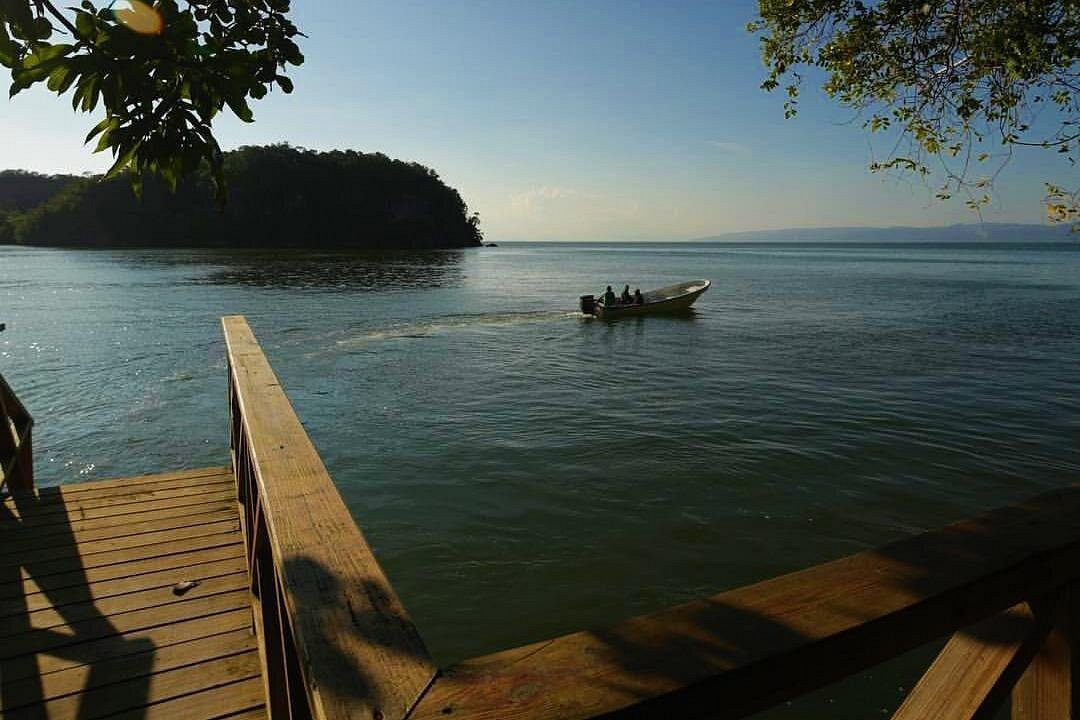
Dissolved Oxygen in Los Haitises National Park: Why Aquatic Life Needs It

Dissolved Oxygen in Los Haitises National Park: How Water Oxygen Supports Fish, Invertebrates and Wetland Life
Introduction
Water may look clean and healthy, but its appearance does not reveal how much oxygen is available to aquatic organisms. Fish, crabs, aquatic insects and many other animals depend on oxygen dissolved in water to survive.
This oxygen is called dissolved oxygen, commonly abbreviated as DO.
In Los Haitises National Park, dissolved oxygen is an important subject because the protected landscape contains interconnected rivers, wetlands, mangrove channels, springs and coastal waters. Each environment has different conditions that influence how oxygen enters, moves through and disappears from the water.
Photosynthesis can add oxygen during daylight, while respiration and decomposition consume it. Water movement can improve oxygen exchange, whereas stagnant conditions and excessive decomposition may contribute to oxygen depletion.
Understanding these processes helps explain how aquatic habitats function and why water-quality monitoring is important for protecting the natural ecosystems of Los Haitises.
1. What Is Dissolved Oxygen?
Dissolved oxygen is oxygen gas that has entered water and is available for aquatic organisms.
Although water molecules contain oxygen atoms, most aquatic animals cannot use those oxygen atoms directly. They depend on molecular oxygen dissolved in the surrounding water.
Fish absorb dissolved oxygen through their gills. Many aquatic invertebrates use gills, specialized body surfaces or other respiratory structures to obtain oxygen.
Dissolved oxygen is usually measured in milligrams per litre (mg/L). It can also be expressed as a percentage of oxygen saturation.
The amount of oxygen available in water depends on several factors:
- Water temperature.
- Salinity.
- Atmospheric pressure.
- Water movement and turbulence.
- Photosynthesis.
- Respiration.
- Decomposition of organic material.
- Mixing between different water sources.
A measurement of dissolved oxygen provides useful information about the conditions aquatic organisms experience.
2. Why Dissolved Oxygen Matters in Los Haitises
Los Haitises contains several types of aquatic habitat, including freshwater wetlands, rivers, mangrove forests, coastal channels and groundwater-connected water environments.
These habitats support different forms of aquatic life.
Fish, crabs, shrimp, molluscs, aquatic insects and microscopic organisms all contribute to the ecological processes taking place in the water.
Dissolved oxygen matters because it supports aerobic respiration, the process through which organisms use oxygen to release energy from food.
When oxygen becomes insufficient, sensitive organisms may experience stress, move to other areas or die if they cannot escape.
Oxygen conditions also influence biological activity in sediment and the breakdown of organic material.
For this reason, dissolved oxygen is an important parameter when scientists assess aquatic habitat conditions.
3. How Does Oxygen Enter Natural Water?
Oxygen enters water through two major natural processes: exchange with the atmosphere and photosynthesis.
Oxygen from the atmosphere
Oxygen in the air can dissolve into water at the surface.
Wind, waves, flowing water and turbulence can increase the exchange between air and water.
For example, moving water that passes over rocks or through small rapids may mix with air more effectively than water in a quiet, stagnant area.
Oxygen from photosynthesis
Aquatic plants, algae and other photosynthetic organisms produce oxygen when they use sunlight to convert carbon dioxide and water into organic material.
Some of this oxygen enters the surrounding water.
Photosynthesis is especially important in areas where sufficient sunlight reaches aquatic plants and algae.
Both atmospheric exchange and photosynthesis contribute to dissolved oxygen, but their relative importance varies between habitats.
4. The Role of Aquatic Plants and Algae
Aquatic plants and algae influence oxygen levels through photosynthesis and respiration.
During daylight, plants and algae use sunlight to produce energy-rich organic material. Oxygen is released as a by-product of photosynthesis.
However, plants also respire. Respiration consumes oxygen and occurs during both day and night.
This means aquatic vegetation does not continuously add oxygen to the water.
The balance between photosynthesis and respiration determines its overall influence.
In shallow, well-lit environments, photosynthesis may increase dissolved oxygen during the day.
At night, photosynthesis stops because sunlight is unavailable, while respiration continues. Oxygen levels can therefore decrease.
This daily cycle is important when monitoring wetlands and other shallow aquatic habitats.
5. How Mangrove Forests Influence Dissolved Oxygen
Mangrove forests are important coastal ecosystems within Los Haitises.
Their roots, branches and surrounding sediments create habitats for different aquatic organisms. Mangrove channels also receive organic material from leaves, branches and other vegetation.
These features influence oxygen conditions in several ways.
Water movement around mangrove roots
Mangrove roots create a complex structure within shallow coastal water.
Tidal movement carries water through these areas and can help mix different water masses.
The amount of mixing depends on channel shape, tidal conditions, water depth and other local factors.
Organic material and decomposition
Leaves and other plant materials enter mangrove waterways and gradually decompose.
Bacteria and other microorganisms break down this organic matter, using oxygen during aerobic decomposition.
When organic material accumulates and oxygen consumption becomes greater than oxygen replacement, dissolved oxygen can decline.
Shading
Mangrove canopies reduce direct sunlight reaching some water channels.
This may limit photosynthesis by algae and aquatic plants in shaded areas. At the same time, shade can reduce surface-water heating.
The overall effect on dissolved oxygen depends on the balance between temperature, photosynthesis, decomposition and water exchange.
It is therefore not correct to assume that all mangrove channels have either high or low oxygen levels.
6. Dissolved Oxygen in Wetlands
Wetlands contain shallow water, vegetation, organic-rich sediment and diverse biological communities.
These conditions create active oxygen cycles.
Oxygen can enter through the water surface and photosynthesis, while respiration and decomposition consume it.
Some wetland areas experience regular water exchange. Others may have slower movement and longer periods of water retention.
These differences can produce distinct oxygen conditions.
In Los Haitises, wetlands are also connected to the wider karst groundwater system. Water entering and leaving these habitats can influence their physical and chemical conditions.
Research on Los Haitises has examined the relationship between wetlands, groundwater, springs and rivers. This work provides important hydrological context, although it should not be mistaken for a complete dissolved-oxygen survey of the park.
7. Why Dissolved Oxygen Can Be Lower Near the Bottom
Oxygen conditions may differ between the surface and bottom of a water body.
The surface is in direct contact with the atmosphere, allowing oxygen to enter through air-water exchange.
Sunlight can also support photosynthesis near the surface when aquatic plants and algae are present.
Near the bottom, several processes can reduce oxygen availability.
- Sunlight may be limited.
- Photosynthesis may be reduced.
- Organic material can accumulate in sediment.
- Microorganisms consume oxygen during decomposition.
- Water movement may be weaker.
- Mixing between surface and bottom water may be limited.
As a result, bottom waters can sometimes contain less dissolved oxygen than surface waters.
This is particularly important in deeper or poorly mixed water bodies.
However, the difference is not always present. Water movement, depth and local conditions determine whether oxygen is distributed evenly.
8. The Relationship Between Water Temperature and Dissolved Oxygen
Water temperature has a major influence on oxygen solubility.
Generally, cooler freshwater can hold more dissolved oxygen than warmer freshwater under comparable conditions.
This means that, even if two water samples are exposed to similar atmospheric conditions, the warmer sample may hold less oxygen at saturation.
Temperature also affects the metabolic activity of aquatic organisms and microorganisms.
Warmer conditions can increase biological activity, which may raise oxygen consumption.
In Los Haitises, temperature differences between shaded channels, open wetlands, rivers and groundwater-fed springs may therefore influence oxygen conditions.
This is why scientists should measure water temperature whenever they record dissolved oxygen.
9. How Rainfall and Water Flow Influence Oxygen
Rainfall can affect dissolved oxygen by changing water movement, depth and mixing.
Increased surface runoff
Rainfall may increase runoff into rivers and wetlands.
This can introduce water with different oxygen and temperature conditions.
Faster water movement
Increased flow can create turbulence and improve contact between water and the atmosphere.
This may increase oxygen exchange in some locations.
Sediment movement
Heavy rainfall and runoff can carry sediment and organic material into waterways.
Suspended material may reduce light penetration, affecting photosynthesis.
Organic material can also increase oxygen consumption when microorganisms decompose it.
Groundwater connections
Groundwater can enter surface-water environments through springs and seepage.
Groundwater oxygen conditions vary depending on its pathway, residence time and chemical environment. Groundwater inflow may therefore change the dissolved-oxygen concentration of receiving water in different ways.
The overall effect of rainfall depends on local hydrology and should be established through measurement rather than assumption.
10. What Is Oxygen Depletion?
Oxygen depletion occurs when oxygen is consumed faster than it is replaced.
It can happen naturally in some environments, but severe or prolonged depletion can create problems for aquatic organisms.
Common contributing processes include:
- Decomposition of large amounts of organic material.
- Respiration by aquatic organisms and microorganisms.
- Limited water circulation.
- High biological oxygen demand.
- Warm water conditions.
- Restricted oxygen exchange with the atmosphere.
When dissolved oxygen becomes very low, sensitive organisms may become stressed.
If oxygen is almost completely absent, the environment is described as anoxic.
Low-oxygen conditions can also change chemical processes in sediment. For example, certain compounds may be released or transformed under oxygen-poor conditions.
11. What Is the Difference Between Hypoxia and Anoxia?
These terms describe different levels of oxygen availability.
Hypoxia means oxygen concentrations are unusually low for the organisms and environmental conditions involved.
Anoxia means oxygen is absent or nearly absent.
The precise concentration used to classify hypoxia varies between scientific studies and environmental contexts.
Some estuarine research uses a threshold around 2 mg/L to identify severe hypoxic conditions. However, this is not a universal biological limit for every species or habitat.
Different aquatic organisms have different oxygen requirements, and their sensitivity can change with temperature, life stage and other environmental conditions.
A monitoring programme should therefore interpret oxygen measurements using appropriate ecological reference information.
12. How Low Oxygen Can Affect Fish
Fish depend on dissolved oxygen for respiration.
When oxygen becomes limited, fish may experience physiological stress.
Possible effects include:
- Reduced feeding activity.
- Slower growth.
- Changes in swimming behavior.
- Reduced reproductive success.
- Movement away from low-oxygen areas.
- Increased risk of death during severe oxygen depletion.
Different fish species have different tolerance levels.
Some species can survive in relatively low-oxygen environments for limited periods, while others require more oxygen.
Fish may also move toward areas with better oxygen conditions if suitable habitat is available.
Protecting the water quality and connectivity of rivers, wetlands and mangrove channels helps maintain suitable habitat for aquatic life.
13. How Low Oxygen Affects Crabs, Shrimp and Other Invertebrates
Fish are not the only organisms affected by dissolved oxygen.
Crabs, shrimp, molluscs, aquatic insects and other invertebrates also require oxygen for respiration.
Some organisms live in the water column, while others spend much of their lives close to the bottom or within sediment.
Bottom-dwelling organisms may be particularly exposed to low oxygen because decomposition can consume oxygen near the sediment surface.
Some species can tolerate temporary changes better than others.
If low-oxygen conditions persist, sensitive organisms may decline or disappear from affected areas.
Because invertebrates are important components of aquatic food webs, changes in their populations can influence other organisms that depend on them.
14. The Importance of Dissolved Oxygen for Mangrove Food Webs
Mangrove ecosystems support interconnected food webs.
Organic material from mangrove vegetation enters the water and sediment. Microorganisms help break it down, while small invertebrates and other organisms use organic matter as food.
Fish and larger animals may feed on these smaller organisms.
Oxygen availability supports many of the organisms involved in this process.
However, mangrove sediments are naturally capable of containing oxygen-poor zones. This is not necessarily evidence of ecosystem damage.
The key issue is whether oxygen conditions remain suitable for the organisms living in the water and sediment.
Healthy mangrove ecosystems depend on natural tidal exchange, sediment processes, vegetation and biodiversity.
15. How Dissolved Oxygen Changes During the Day
Dissolved oxygen can follow a daily cycle.
Early morning
Oxygen may be relatively low before sunrise because photosynthesis has stopped overnight while respiration continues.
Morning
As sunlight increases, photosynthesis begins and oxygen production can rise.
Afternoon
In some productive shallow waters, photosynthesis can raise dissolved oxygen considerably during the day.
Evening
As sunlight decreases, photosynthesis slows and eventually stops.
Night
Respiration continues, consuming oxygen. Dissolved oxygen may gradually decline again.
The pattern is not identical in every water body.
Strong tidal movement, flowing water, groundwater exchange and weather conditions can influence the daily cycle.
This is why measurements taken only in the afternoon may fail to identify oxygen depletion occurring near dawn.
16. How Scientists Measure Dissolved Oxygen in Los Haitises
Dissolved oxygen is commonly measured using a digital oxygen meter or a multiparameter water-quality instrument.
Some monitoring programmes also use chemical methods, such as the Winkler titration method.
A reliable field procedure includes the following steps.
Step 1: Choose the sampling location
Select representative locations in rivers, wetlands, springs or mangrove channels.
Step 2: Record environmental conditions
Document the date, time, recent rainfall, weather, water depth and habitat type.
Step 3: Measure water temperature
Record temperature because oxygen solubility depends on it.
Step 4: Calibrate the instrument
Calibrate the dissolved-oxygen meter according to the manufacturer's instructions.
Step 5: Take the measurement
Place the probe in the water at a consistent depth and allow the reading to stabilize.
Step 6: Record oxygen concentration
Record the result in mg/L and, when available, percentage saturation.
Step 7: Repeat measurements
Take repeat readings to check consistency and reduce measurement error.
Step 8: Compare different depths and times
Where water depth allows, compare surface and bottom measurements. Repeat monitoring at different times of day to identify daily variation.
For Los Haitises, a useful programme would compare different habitat types rather than treating all water bodies as one system.
17. Why Percentage Saturation Is Also Useful
Dissolved oxygen concentration is commonly reported in mg/L, but percentage saturation provides additional information.
Percentage saturation compares the measured oxygen concentration with the amount of oxygen water can hold under the relevant temperature, salinity and atmospheric pressure conditions.
A simplified relationship is:
[
\text{DO saturation (%)} =
\frac{\text{Measured DO}}{\text{Oxygen saturation concentration}}
\times 100
]
For example, a water sample can have a lower oxygen concentration than another sample simply because it is warmer or more saline.
Percentage saturation helps researchers interpret the measurement in relation to the physical conditions.
Values above 100% can occur when photosynthesis produces oxygen faster than it escapes to the atmosphere.
A percentage below 100% indicates that the water contains less oxygen than its estimated saturation concentration under the relevant conditions.
18. What Other Measurements Should Be Taken With Dissolved Oxygen?
Dissolved oxygen is most useful when interpreted with other water-quality indicators.
ParameterWhy it mattersWater temperatureInfluences oxygen solubilitypHHelps describe acid-base conditionsWater depthHelps identify possible differences between surface and bottomConductivityProvides information about dissolved ionsTurbidityIndicates suspended particles that may affect light penetrationBiochemical oxygen demandEstimates oxygen consumption associated with biological decompositionNutrientsCan help identify conditions that encourage excessive plant or algal growthWater flowHelps explain mixing and atmospheric exchange
Biochemical oxygen demand, or BOD, is particularly relevant.
It estimates the oxygen consumed by microorganisms as they break down biodegradable organic material under specified test conditions.
Higher BOD can indicate greater potential oxygen consumption, although interpretation depends on the sample and testing method.
Combining these measurements provides a more complete picture of aquatic habitat conditions.
19. What Does Existing Research Tell Us About Dissolved Oxygen in Los Haitises?
Research has documented the hydrological connections between wetlands, rivers, springs and groundwater in Los Haitises.
A 2013 study by Lluberes and colleagues examined the karst wetland system through water-level measurements, hydrochemical and isotopic sampling, and a preliminary water-management approach.
A separate speleological investigation carried out in 2010 examined cave streams and springs in the eastern part of the national park. It included water sampling and a tracer test investigating connections between an explored cave and springs near the park's eastern boundary.
These studies are valuable for understanding how water moves through the landscape.
However, they should not be presented as a complete dissolved-oxygen monitoring survey. The sources discussed here do not establish a current park-wide average dissolved-oxygen concentration or a verified oxygen range for every wetland, river and mangrove channel.
A dedicated monitoring programme would be needed to establish those values.
20. Why Long-Term Dissolved Oxygen Monitoring Is Important
A single dissolved-oxygen measurement describes conditions at one location and one moment.
Long-term monitoring can reveal patterns that occasional measurements may miss.
A useful programme could examine:
- Daily oxygen fluctuations.
- Differences between wet and dry periods.
- Oxygen conditions at different water depths.
- Variations between mangrove and freshwater habitats.
- Changes following heavy rainfall.
- Differences between flowing and stagnant water.
- Possible effects of changes in vegetation or organic matter.
Measurements should be repeated at consistent locations and times whenever possible.
This makes it easier to identify natural variation and investigate unusual conditions.
Long-term records can support conservation planning and help identify areas that may require closer ecological assessment.
21. How Visitors Can Help Protect Water Oxygen Conditions
Visitors can help protect the aquatic environments of Los Haitises by reducing activities that may introduce excessive waste or disturb natural habitats.
Responsible practices include:
- Taking all rubbish away from rivers and wetlands.
- Never pouring oils, soaps or chemicals into waterways.
- Avoiding damage to mangrove roots and aquatic vegetation.
- Following authorized boat routes.
- Not disturbing fish, crabs and other aquatic wildlife.
- Avoiding activities that unnecessarily stir up sensitive sediments.
- Following park rules and guide instructions.
Protecting vegetation and preventing contamination help maintain the natural conditions that support aquatic organisms.
The goal is not to change natural wetland processes, but to avoid introducing additional environmental pressure.
Conclusion
Dissolved oxygen is essential for aquatic life in Los Haitises National Park. Fish, crabs, shrimp, aquatic insects and many other organisms depend on oxygen dissolved in water.
Oxygen enters natural water through atmospheric exchange and photosynthesis. It is consumed through respiration, decomposition and other biological and chemical processes.
Temperature, rainfall, water movement, vegetation and organic matter all influence the balance.
Mangrove channels, rivers, wetlands and springs may therefore have different oxygen conditions, even within the same protected landscape.
Existing research has helped explain the hydrological connections between Los Haitises wetlands, rivers, springs and groundwater. However, dedicated and repeated dissolved-oxygen measurements are necessary to establish reliable oxygen conditions for individual habitats.
Protecting the park's aquatic ecosystems means protecting the natural processes that maintain water movement, vegetation, biodiversity and suitable conditions for aquatic life.
Frequently Asked Questions
1. What is dissolved oxygen?
Dissolved oxygen is oxygen gas present in water that aquatic organisms can use for respiration.
2. Why is dissolved oxygen important in Los Haitises?
It supports aquatic organisms living in rivers, wetlands, mangrove channels and other water environments.
3. How does oxygen enter water?
Oxygen enters through exchange with the atmosphere and through photosynthesis by aquatic plants and algae.
4. What consumes dissolved oxygen?
Respiration by aquatic organisms and microorganisms, decomposition of organic matter and certain chemical reactions consume dissolved oxygen.
5. Do mangroves produce oxygen?
Mangrove trees produce oxygen through photosynthesis, but their leaves and other organic material also contribute to decomposition processes that consume oxygen in surrounding water and sediment.
6. Why can dissolved oxygen become low at night?
Photosynthesis stops without sunlight, but aquatic organisms and microorganisms continue to respire and consume oxygen.
7. Does warm water contain less oxygen?
Generally, warm water can hold less dissolved oxygen than cooler water under comparable conditions.
8. What is oxygen depletion?
Oxygen depletion occurs when oxygen is consumed faster than it is replaced, causing dissolved-oxygen concentrations to decline.
9. What is the difference between hypoxia and anoxia?
Hypoxia describes very low oxygen conditions, while anoxia means oxygen is absent or nearly absent.
10. How does low oxygen affect fish?
Low oxygen can cause stress, reduced feeding, changes in behavior, movement away from affected areas and, in severe cases, death.
11. How is dissolved oxygen measured?
It is commonly measured using a calibrated digital dissolved-oxygen meter or a suitable laboratory chemical method.
12. What is a good dissolved-oxygen level for aquatic life?
There is no single ideal value for every species and habitat. Oxygen requirements vary with species, life stage, temperature and environmental conditions.
13. What is biochemical oxygen demand?
Biochemical oxygen demand measures the oxygen consumed by microorganisms as they break down biodegradable organic material under specified test conditions.
14. Is there a confirmed average dissolved-oxygen level for Los Haitises?
The research sources discussed in this article do not establish a current park-wide average. Individual locations would need dedicated field measurements.
15. How can visitors protect aquatic ecosystems?
Visitors can avoid littering, prevent chemical contamination, protect mangrove vegetation and follow authorized visitor routes and park instructions.


