Kayaking in Los Haitises National Park: Mangroves & Travel Tips

Kayaking in Los Haitises National Park: Mangrove Channels, Nature and Visitor Experience
Kayaking in Los Haitises National Park offers a peaceful way to experience one of the Dominican Republic's most distinctive natural environments. Instead of viewing the mangroves only from a motorboat, visitors can paddle along suitable waterways and observe the surrounding landscape at a slower pace.
The park is known for its mangrove forests, limestone formations, coastal habitats, caves and diverse birdlife. Its waterways create an unusual setting for guided nature activities, allowing visitors to experience the relationship between the water, vegetation and wildlife.
A kayaking excursion may be offered as a standalone activity or combined with a boat transfer, rainforest walk or other guided experience. Routes, difficulty, duration and included equipment vary, so it is important to check the details before booking.
This guide explains what to expect from kayaking in Los Haitises, how to prepare and how to enjoy the activity while respecting the protected environment.
1. Why Go Kayaking in Los Haitises National Park?
Los Haitises has a landscape that is particularly interesting to explore from the water. Mangrove forests line parts of the coastal waterways, while limestone formations and forest-covered hills create a distinctive background.
Kayaking offers a slower and more direct way to experience these surroundings. Paddling allows visitors to move at a relaxed pace, listen to natural sounds and notice details along the water that might be easy to miss during a faster journey.
Depending on the authorized route, a guided kayaking experience may offer:
- Views of mangrove roots and vegetation
- Quiet passages through suitable waterways
- Opportunities to observe birds and other wildlife
- Views of limestone formations
- Explanations about the park's natural environment
- A closer appreciation of the coastal landscape
The Dominican Republic's official tourism guide identifies kayaking through the park's mangrove system as one of the ways to explore Los Haitises.
2. Discovering the Mangrove Channels by Kayak
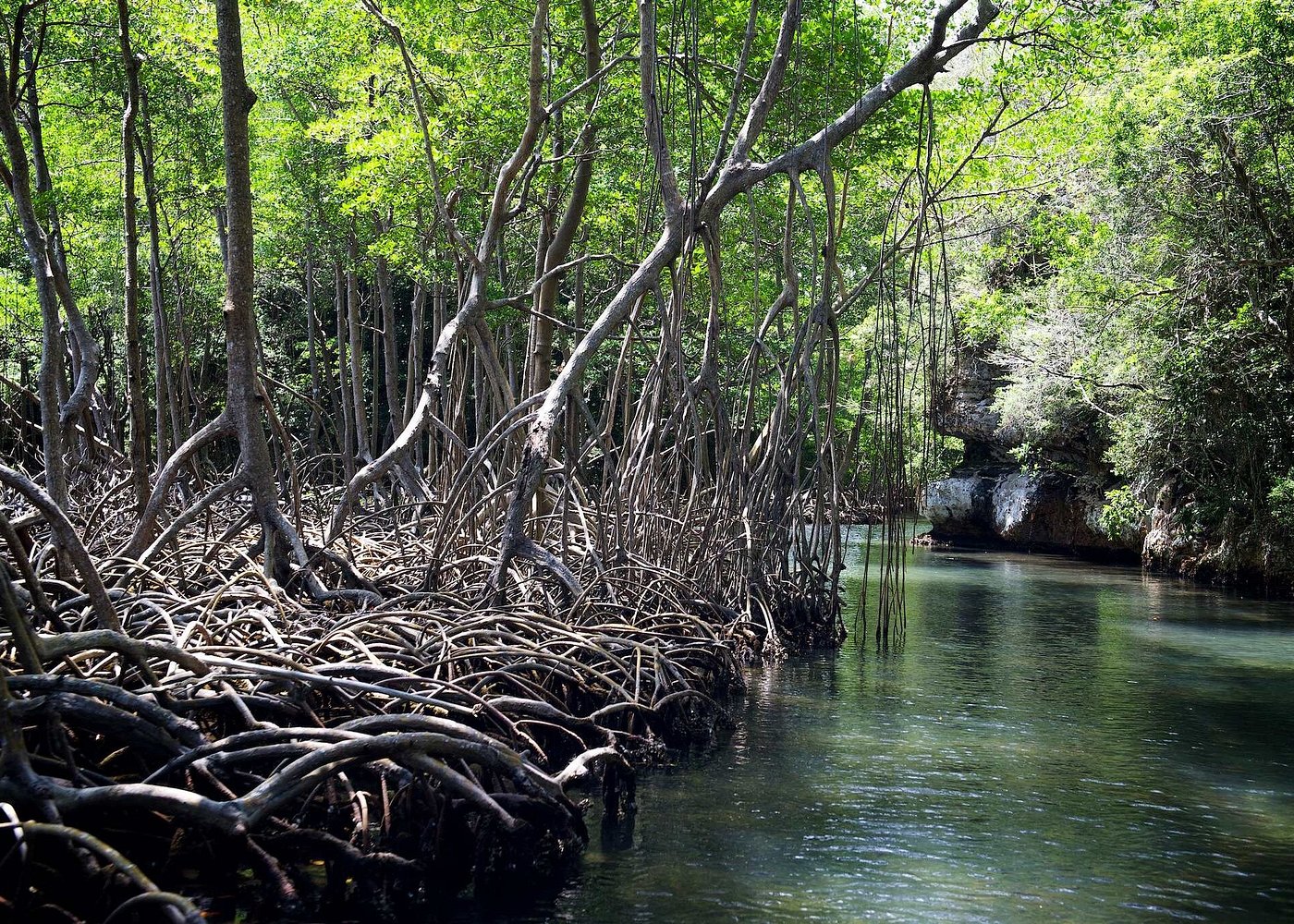
Mangroves are one of the most memorable features of Los Haitises. Their roots extend into coastal water and create important habitats for aquatic organisms and other wildlife.
When kayaking through a permitted mangrove channel, visitors can observe how the vegetation grows along the water's edge. The route may pass close to mangrove roots, shaded sections and areas where the waterway opens into a wider space.
The experience is not about paddling quickly. It is about moving carefully and appreciating the surroundings.
What can you notice along the route?
Look for:
- Different shapes and sizes of mangrove roots
- Vegetation growing along the water
- Small fish or other aquatic life where visible
- Birds resting or moving through the trees
- Reflections of the surrounding forest on the water
- Changes in the width and appearance of the channels
Wildlife sightings depend on natural conditions. Animals may remain hidden, move away or be less active during your visit.
Why are mangroves important?
Mangrove forests support coastal ecosystems. Their root systems provide shelter for aquatic life, help stabilize sediments and contribute to the health of coastal environments.
A guided kayak trip can make these ecological features easier to appreciate. Ask your guide about the mangrove species, the animals that use the habitat and the importance of protecting the waterways.
3. What Is a Guided Kayaking Experience Like?
The exact itinerary depends on the operator and selected package, but a guided kayaking excursion generally involves meeting the guide, receiving equipment, learning basic paddling instructions and following an approved route.
Some advertised experiences also combine kayaking with a boat transfer or a guided forest walk. These are separate itinerary elements and should be confirmed before booking.
A typical experience may include the following stages.
Meeting the guide
Your excursion begins at the confirmed meeting point. This may be near a designated access area or another location specified by the operator.
Before departure, confirm the exact meeting address, arrival time and transportation arrangements.
Equipment and instructions
The guide should explain how to hold and use the paddle, how to move forward and turn, and how to follow the group.
Make sure your equipment fits properly and ask questions if anything is unclear.
Entering the water
Once the group is ready, the guide leads participants onto the approved route.
The paddling pace should allow participants to remain together and observe the environment without unnecessary disturbance.
Exploring the mangroves
During the route, the guide may explain the mangrove ecosystem, local wildlife and park conservation rules.
The length of the kayaking portion and the number of stops vary between excursions.
Returning to the departure area
At the end of the activity, follow the guide's instructions when approaching the landing point and returning equipment.
If the package includes additional activities, such as hiking or a boat transfer, confirm how these fit into the day's schedule.
4. Do You Need Previous Kayaking Experience?
Not necessarily. Some guided excursions are marketed to beginners and include basic instructions before participants enter the water.
However, beginner suitability depends on the actual route, weather, equipment, group arrangements and the operator's safety procedures.
Before booking, ask:
- Is previous kayaking experience required?
- Will the guide demonstrate basic paddling techniques?
- Are single and tandem kayaks available?
- How long will participants paddle?
- Are there rest opportunities?
- What happens if a participant becomes tired?
- Are life jackets provided in suitable sizes?
Do not assume that every route is suitable for every beginner. Explain your experience level honestly so the operator can recommend an appropriate activity.
5. How Difficult Is Kayaking in Los Haitises?
Kayaking requires physical effort, even when the route is relatively calm. Participants use their arms, shoulders and upper body to paddle and control the kayak.
The difficulty can depend on several factors:
- Total paddling time
- Distance covered
- Wind and water conditions
- Type of kayak
- Group pace
- Number of breaks
- Whether the excursion includes hiking or other activities
A regional tourism-product catalogue describes one guided kayak experience in Los Haitises as medium difficulty. That is an example of a particular excursion, not a rating for every kayaking route in the park.
If you do not exercise regularly or have never used a kayak, ask the operator about the expected physical effort. Choose a shorter or more suitable experience if available.
6. Kayaking Equipment: What Should Be Provided?
Before entering the water, check that the essential equipment is available and suitable for your activity.
Depending on the excursion, equipment may include:
Kayak
The kayak should be appropriate for the route and number of participants. Ask whether you will use a single or tandem kayak.
Paddle
The paddle should be suitable for your height and the kayak. Your guide should explain how to hold and use it.
Life jacket
A properly fitted life jacket is an important part of water safety. Wear it as instructed throughout the activity.
Additional equipment
Some excursions may provide other items, such as helmets for particular combined activities or waterproof storage. These are not universal inclusions.
Confirm exactly what is supplied and what you need to bring yourself.
7. What Should You Wear for Kayaking?
Choose clothing that is comfortable when wet and suitable for a tropical outdoor activity.
Useful items include:
- Lightweight clothing that dries relatively quickly
- Secure footwear suitable for wet conditions
- A hat or cap
- Sunglasses with a secure strap
- Sunscreen
- A waterproof bag for valuables
- A change of clothes for after the activity
Avoid loose items that could fall into the water. Keep phones, cameras and other electronics in suitable waterproof protection.
If you are unsure what footwear is appropriate for the launch area or any walking section, ask the operator before the excursion.
8. Wildlife Observation While Kayaking
Los Haitises is known for its birdlife and coastal habitats. A kayak can provide a quieter way to move through suitable waterways, but it does not guarantee close wildlife encounters.
Depending on the route and natural conditions, visitors may notice birds around mangrove vegetation, coastal plants and nearby formations.
The official tourism information for Los Haitises identifies several bird species associated with the park, including pelicans, herons, egrets and woodpeckers.
How to observe wildlife responsibly
- Keep a respectful distance from animals.
- Do not chase birds or approach nests.
- Avoid loud conversations and unnecessary noise.
- Never feed wildlife.
- Do not touch aquatic animals.
- Follow the guide's instructions around sensitive habitats.
The purpose of wildlife observation is to appreciate animals in their natural environment, not to force an encounter.
9. Can Kayaking Be Combined With Hiking?
Yes, some advertised excursions combine kayaking with guided hiking. These packages allow visitors to experience both the park's waterways and parts of its forest environment.
However, a combined excursion is more physically demanding than kayaking alone.
Before selecting one, confirm:
- How much time is spent kayaking
- How long the hike lasts
- What type of terrain is involved
- Whether there are steep or uneven sections
- What footwear is recommended
- Whether water and food are included
- Whether transport between activities is provided
Do not assume that every kayaking tour includes a rainforest walk. Check the actual itinerary and choose according to your interests and fitness.
10. Food, Drinking Water and Visitor Facilities
Food and facilities vary between tour operators and departure arrangements.
Some advertised kayaking packages include bottled water or light snacks. Other excursions may provide meals as an optional extra or require visitors to arrange their own food.
Before booking, ask:
- Is drinking water included?
- Are snacks or lunch provided?
- Is there a place to eat before or after kayaking?
- Are restroom facilities available at the meeting point?
- Is there a place to change clothes?
- Can personal belongings be stored securely?
Do not assume that facilities are available beside every kayaking route. Confirm the arrangements before leaving for the excursion.
Bring sufficient drinking water if the operator does not provide it, and avoid leaving food packaging or other waste in the park.
11. Safety Tips for Kayaking
A safe kayaking experience begins with following the guide's instructions and using the equipment correctly.
Keep these precautions in mind:
- Wear your life jacket as instructed.
- Listen carefully to the safety briefing.
- Stay with the group.
- Maintain a safe distance from other kayaks.
- Follow the approved route.
- Avoid hitting mangrove roots with your paddle.
- Do not stand in the kayak unless the guide specifically instructs you to do so.
- Tell the guide if you feel tired or uncomfortable.
- Secure personal belongings before entering the water.
- Follow instructions if weather or water conditions change.
Wind, rain and changing water conditions can affect an excursion. The operator may need to modify or cancel the activity if conditions are unsuitable.
Never pressure a guide to continue when they consider the route unsafe.
12. Responsible Kayaking in a Protected National Park
Los Haitises is a protected natural area. Visitors should take care not to damage the mangroves or disturb wildlife.
Kayaking can be a low-impact way to explore the park when participants follow authorized routes and responsible practices.
Protect mangrove roots
Do not use roots to push or pull your kayak. Avoid striking them with paddles or damaging surrounding vegetation.
Keep the water clean
Never throw plastic, food packaging or other rubbish into the water. Take all waste back with you.
Respect wildlife
Do not feed, chase, capture or touch animals. Observe from a respectful distance.
Follow authorized routes
Do not enter restricted channels or land in unauthorized areas. Follow the guide's directions throughout the activity.
Protect cultural and natural features
If the excursion includes an authorized cave or cultural site, do not scratch walls, touch or remove archaeological objects, or leave markings.
The Dominican Republic's environmental visitor guidance prohibits littering, disturbing wildlife and removing natural or cultural objects from protected areas.
13. How to Choose a Kayaking Tour
Compare excursions based on the actual activity rather than the promotional photographs alone.
Route: Ask which waterways or mangrove areas are included and whether the route is authorized.
Duration: Confirm the time spent actively kayaking, not only the total excursion duration.
Equipment: Check whether kayaks, paddles and properly fitted life jackets are included.
Guide: Ask whether a guide accompanies the group throughout the activity and which languages are available.
Group size: Find out how many participants will be kayaking together.
Difficulty: Explain your experience level and ask about the physical requirements.
Additional activities: Confirm whether hiking, boat transfers or cave visits are included or optional.
Food and facilities: Ask about drinking water, meals, restrooms and changing arrangements.
Weather policy: Understand what happens if conditions make kayaking unsuitable.
Meeting point: Confirm the exact location and whether transportation is included.
A clear description of these details is a better basis for choosing a tour than a claim that an excursion is suitable for everyone.
14. Is Kayaking in Los Haitises Worth It?
For travelers who enjoy outdoor activities and natural scenery, kayaking can be a rewarding way to experience Los Haitises National Park.
The mangrove waterways offer a different perspective from a conventional sightseeing trip. Paddling slowly through an authorized channel allows visitors to notice the vegetation, observe the surrounding habitats and learn about the park from a guide.
It is especially appealing to people who enjoy active nature experiences rather than spending the entire excursion on a motorized boat.
However, the right choice depends on your comfort in the water, physical ability and preferred activity level. If you want to combine paddling with a longer forest walk, look for a clearly described combined excursion. If you prefer a simpler activity, ask about a kayaking-only option.
Frequently Asked Questions
1. Can visitors go kayaking in Los Haitises National Park?
Yes. Kayaking is one of the activities associated with exploring the park's mangrove system. The route and arrangements depend on the authorized excursion and operator.
2. Do I need kayaking experience?
Some guided tours accept beginners and provide basic instructions. Confirm the experience requirements and route conditions before booking.
3. What can I see while kayaking?
Depending on the route, you may see mangrove roots, coastal vegetation, waterways, limestone scenery and opportunities for bird and wildlife observation.
4. Are kayaks and paddles included?
Some guided packages include kayaks, paddles and safety equipment. Check the specific booking description rather than assuming all tours provide the same items.
5. Are life jackets provided?
Confirm this with the operator before booking. A properly fitted life jacket should be provided and worn according to the safety instructions.
6. Is kayaking physically difficult?
Kayaking requires paddling effort. Difficulty depends on the route, duration, water conditions and your experience. Some excursions are described as medium difficulty, but ratings vary.
7. Can kayaking be combined with hiking?
Some excursions combine kayaking with guided walks through forest areas. Confirm the walking duration, terrain and physical requirements before choosing a combined tour.
8. Is food included?
Not always. Some packages may include water or light snacks, while lunch may be optional or excluded. Ask the operator for a complete list of inclusions.
9. What should I bring?
Bring comfortable clothing, suitable footwear, sun protection, drinking water if not provided and a waterproof bag for personal belongings.
10. Can I take a camera?
Yes, but protect it from splashes and accidental drops. A waterproof case or dry bag is useful.
11. Is kayaking suitable for children?
Suitability depends on the child's age, ability, equipment and the operator's rules. Ask the tour provider directly rather than assuming every excursion accepts children.
12. What happens if the weather changes?
The operator may adjust, delay or cancel the activity if conditions are unsuitable. Ask about the weather and cancellation policy before booking.
Final Thoughts
Kayaking in Los Haitises National Park is an opportunity to experience the park's mangrove waterways at a slower pace. The activity combines gentle exploration, outdoor movement and opportunities to learn about the natural environment.
Choose a guided excursion with clear safety arrangements, suitable equipment and an itinerary that matches your ability. Respect the mangroves, keep your distance from wildlife and follow the park's visitor rules.
With thoughtful preparation, a kayaking trip can become one of the most memorable ways to discover the natural character of Los Haitises.